One of the best SEO strategies of the past 10 years has been optimizing for informational search queries. Early in the decision-making process, users search for possible solutions, compare pros and cons, and gather information. This was exactly where companies could build visibility, establish trust, and later drive conversions with helpful content.
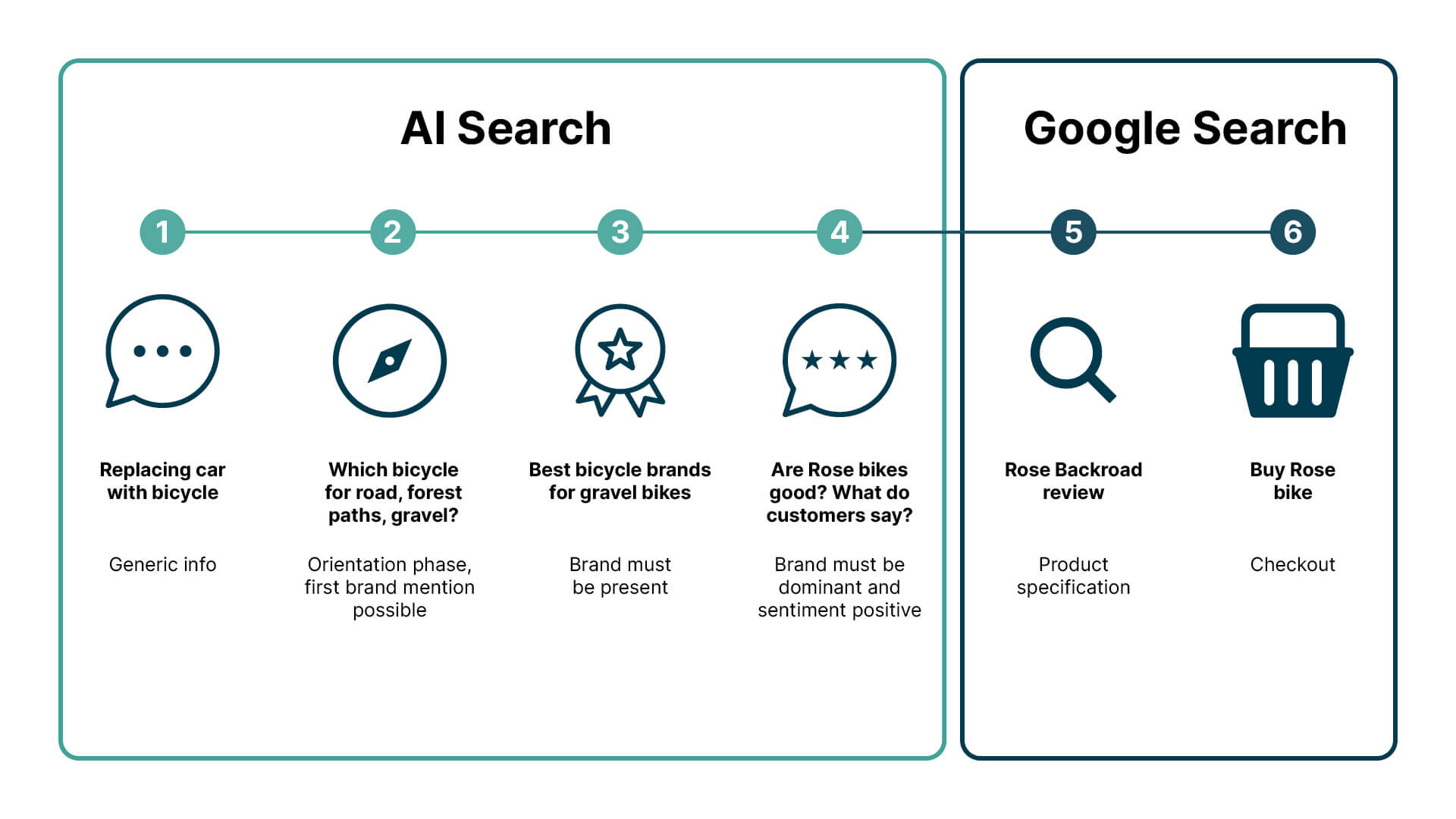
This research phase hasn’t disappeared—but it has shifted. More and more people are asking their initial questions not on Google, but through AI chatbots. To gather information, users no longer need to visit websites and read the content there. They get an initial overview directly from AI. They only turn to Google when it comes to comparing prices and making a purchase.
At first glance, this is troubling for website operators because it results in fewer clicks. At the same time, many users arrive at the website significantly better informed when they do eventually click through.
We’re seeing this pattern more and more often in analytics data: Traffic is declining, but the conversion rate is rising. So fewer visitors don’t automatically mean less business. The key factor is whether the brand has already been on the customer’s radar during the decision-making phase.
An example: Someone is considering switching from a car to a bike more often in everyday life. In the past, this person would likely have conducted several Google searches, read blog posts, compared reviews, and worked their way step by step toward a purchase decision.
Today, research using an AI system might look like this: The person first asks, in general terms, whether a bike can be a real alternative to a car for everyday use. Then they ask which type of bike is suitable for roads, forest trails, and gravel tracks. At this point, a gravel bike might come up for the first time. In the next step, the potential customer asks about good brands for gravel bikes. This is where it becomes relevant for manufacturers: Is their own brand mentioned or not?
The more specific the decision becomes, the more classic search channels like Google or YouTube come back into play: reviews, first-hand user experiences, price comparisons, and purchases typically still happen via Google.