

There are countless pages on virtually any topic on the internet. For example, if we enter the question, “How does SEO work?” into Google, the search engine finds around 2.7 million pages or documents. And this is only the part of the internet that Google has crawled and indexed—namely, the pages that Google has discovered and considered important enough to include in its index.
How Does SEO Work? Search Engine Optimization Made Simple

CEO

Becoming Visible When People Search
If someone searches on Google for exactly what you offer but your website doesn’t appear, it’s as if your business doesn’t exist online at all. This is exactly where Search Engine Optimization (SEO) comes in. The goal is for your content to be found when people search and to appear as high as possible in the results. Websites that rank high on Google get more attention, clicks, and often, and ultimately more customers.
What Does Google Actually Do?
When someone searches for something on Google, the search engine does not scan the entire internet, but rather its own index. This index contains billions of web pages that were previously discovered and analyzed by so-called crawlers.
Google doesn’t just evaluate whether a page contains a specific word—it aims to deliver the best possible answer to a question. This means content must be clear, useful, and relevant to the search query.
We explain exactly how Google finds and evaluates content in the first part of our SEO guide.
Why Is SEO So Important?
SEO is one of the most sustainable measures in online marketing. While paid advertising stops working as soon as the budget runs out, a well-optimized website can remain visible in the long term.
SEO also brings qualified traffic: people who are actively searching often already have a specific need. If you’re visible with the right content at that moment, you have a clear advantage.
Studies show that a large share of website traffic comes from organic search—especially via Google. And most clicks go to the top three results on the search results page.1
What Does SEO Include?
At its core, SEO consists of two main parts: On-page SEO and Off-page SEO. Together, they create a website that Google can reliably crawl, understand, and classify as relevant.
On-page SEO covers everything that happens directly on your website. This includes a solid technical foundation (e.g., a functioning structure, fast loading times, and mobile usability), a clear information architecture, and content that is easy to understand, complete, and helpful. The goal is to make it easy for Google to access your website and to quickly deliver users exactly what they are looking for.
Off-page SEO refers to everything that happens outside the website—above all, backlinks. Links from other sites act as recommendation signals for Google: the more trustworthy, topically relevant, and high-quality these recommendations are, the more your site’s authority grows.
In summary, this means: SEO involves building a website in a way that allows Google to easily process it and correctly interpret its content. The foundation for this is:
- clear, well-structured content that answers the target audience’s questions
- technically clean implementation so crawlers can understand the site and users can navigate it easily
- authority from external sources, especially through high-quality, topically relevant links
SEO is therefore not about tricks—it is a combination of quality, structure and reputation, both internally and externally.
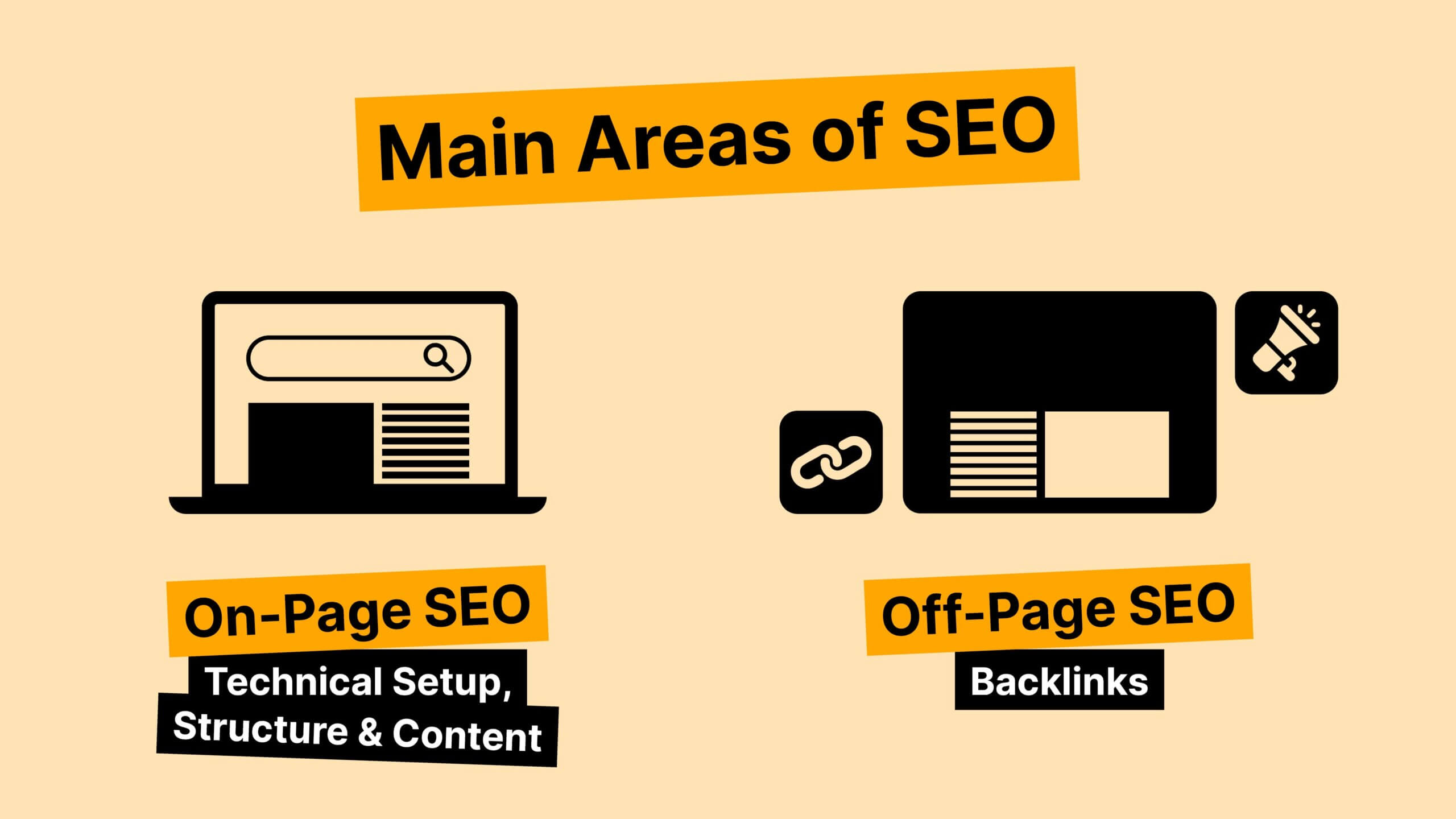
Figure 1: Sub-areas of SEO: On-Page SEO and Off-Page SEO
SEO Levers: Relevance, Popularity & User Experience
For your content to rank well on Google, it’s not enough to simply include a few keywords. Search engines evaluate pages based on multiple criteria—especially three key factors: relevance, popularity, and user experience. By working purposefully on these factors, you lay the foundation for sustainable SEO success.
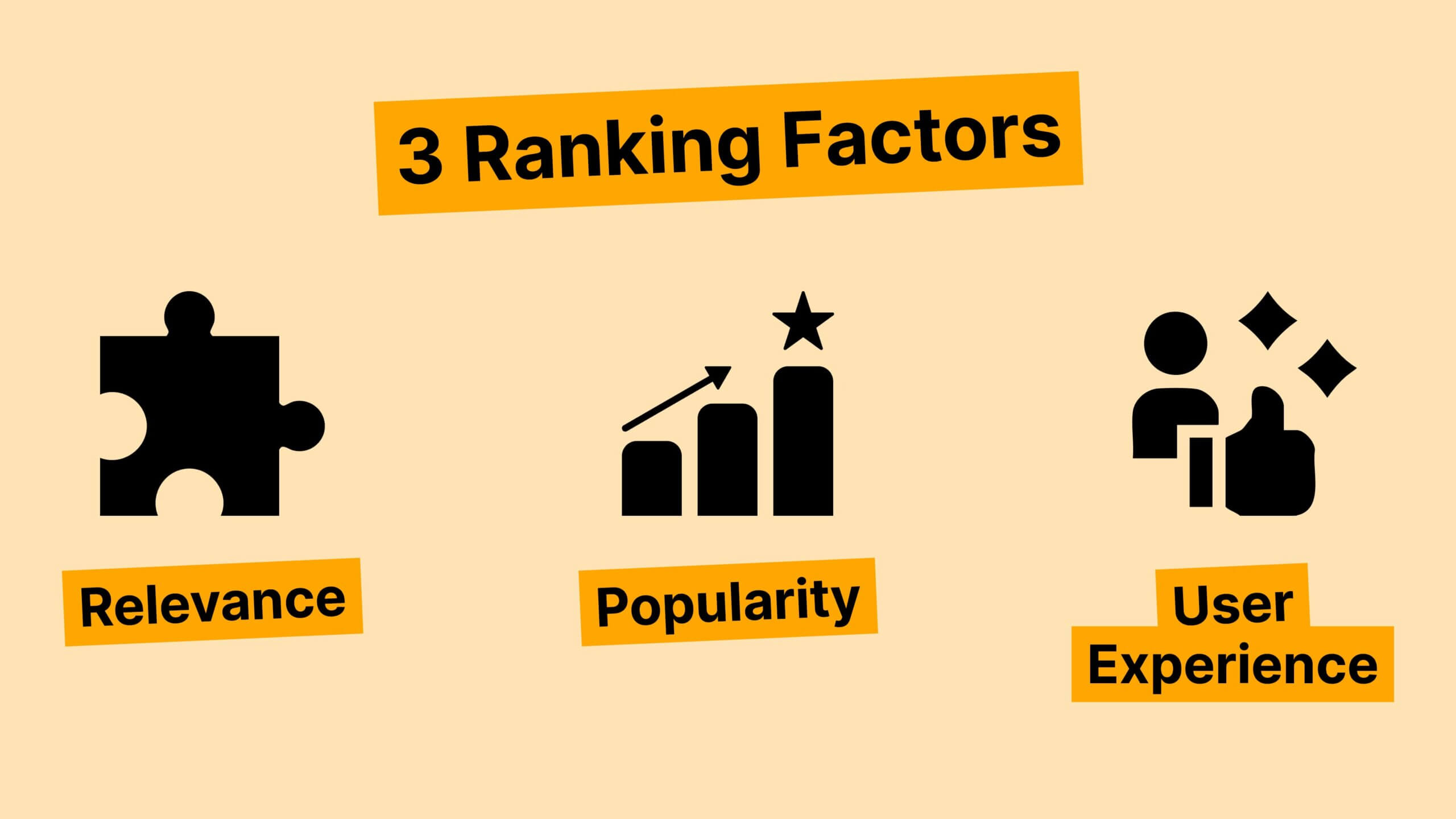
Figure 2: Three ranking factors in SEO: relevance, popularity, and user experience
Relevance
Relevance primarily refers to the content of a page. Google tries to understand the user’s question and show the documents that best satisfy the search intent.
So we also ask: What is the intention behind a search query? What are the wishes, interests, problems, and questions of my target audience? And how can we best answer those questions or meet those needs?
Our goal is to deliver exactly the type of content that offers the greatest value to our target audience. This can be text, lists, videos, images, or applications.
If our content is among the most relevant for a topic,we’ve created the best conditions for strong rankings.
Popularity
For most topics, there aren’t just huge numbers of documents overall—there are also many highly relevant ones. Therefore, Google needs another benchmark to determine whether a document has what it takes to rank on the first page. This is where popularity comes into play.
The idea is that a document that is both relevant and popular is likely more valuable than one that gets no external attention. This popularity is primarily determined by backlinks: how many other websites link to a particular document. The more links a page receives, the more authority it gains. However, it’s not just the number of links that matters. Quality—meaning the authority of the linking site—and topical relevance are even more important.
Links are like recommendations. A recommendation from an expert is usually more valuable than one from someone without expertise. The same applies to links: a link from a topically relevant website that is also an authority in its field typically carries more weight than a link from an unknown link directory with no specialization.
User Experience
Once you’ve managed to reach the first page of Google through relevance and popularity, the third major factor comes into play: user experience. How satisfied are users with the results that Google shows them?
To evaluate user experience, Google uses artificial intelligence—known as the RankBrain algorithm. This allows Google to measure how happy users are with a particular page.
If someone searches for something, clicks on the first result, but then returns to Google within 10 seconds using the back button to click on the third result, this is a negative signal for the top-ranked page. If the user stays on the third-ranked website, watches a video, interacts, clicks around, and even signs up for the newsletter in the end, that’s a very strong signal in its favor.
If this happens frequently—meaning that a large number of users display similar behavior—Google will lower the ranking of the result that was originally first and move the one that was previously third into the top spot, since users appear to be more satisfied with it.
How Should I Start?
To succeed with SEO, there is one thing you must do above all else: putting the user first. If you have taken the first two factors seriously and created a page that is both highly relevant and popular, the chances are very high that users will also be satisfied with it.
That’s why the first step is always to determine what your target audience is searching for. A simple keyword research can help with this. It’s not just about finding suitable terms, but about understanding the needs behind them. Anyone who wants to be found online cannot avoid a solid keyword research. You can find more details in Part 3 of our SEO Guide.
The next step is to create the right content. For example, a plumber in Graz should have a page specifically dedicated to that topic with clear information, a local focus, and easy-to-understand text.
The principle is: it’s better to do a few pages really well than to create many pages half-heartedly.
So, What Does All Of This Actually Achieve?
When your content gets found, you gain reach. And most importantly, the right traffic: people searching for exactly what you offer. Only if you’re visible for the right keywords will you generate inquiries, bookings, or sales.
SEO works long-term, but it pays off. The top search results receive the vast majority of clicks, while pages on the second page and beyond are practically invisible.
Achieving that level of visibility requires a few key steps:
- Solid foundation: A technically sound site that Google can easily crawl and understand.
- Clear content: Texts that genuinely answer search intent—specific, easy to understand, and offering real value.
- Strong internal structure: Strengthening key pages through strategic internal linking and suitable anchor texts.
- Authority from external sources: High-quality backlinks from trusted partners, industry directories, or valuable content.
Anyone who consistently implements these fundamentals sends Google the right signals, and is rewarded with higher rankings, greater visibility, and real results.
Conclusion
Search engine optimization is about understanding what people are searching for, and providing it better than anyone else. Anyone who manages that can achieve a great deal with SEO, without relying on technical gimmicks or marketing buzzwords.
In the following articles of our SEO guide, we will take a closer look at specific aspects of SEO, from keyword research and search intent to concrete optimization tips for your content.