

Without the right keywords, any SEO strategy is like a ship without a compass: you can’t really tell where you’re heading. However, keyword research isn’t just about typing a few terms into a tool and picking the ones with the highest search volume. The best rankings come from understanding your target audience, speaking their language, and knowing what they’re actually searching for. Anyone who ignores this may produce content—but misses the real goal: reaching people.
Keyword Research: Step by Step to the Right Search Terms

CEO
Brainstorming & Starting Point: Your Website and Target Audience
Before using any tools, two questions should be answered: What do you offer, and who’s searching for it?
Keyword research always starts with the target audience. What problems do your customers want to solve? What exactly do they search for when they need your service but don’t know your brand yet? For example, if you sell project management software, consider whether potential customers are more likely to search for “project management software,” “team task management”, or “task planning tool.”
It’s also worth translating your offering into everyday language. Internal terminoloy and industry jargon are rarely used as search queries. It helps to collect typical customer questions—for example, from emails, consultations, or comments. Many successful keywords originate from the language your customers naturally use.
First Keyword Ideas with Google Suggest & Co.
The next step is to compare your initial ideas with real search queries. Google itself provides valuable clues here: through autocomplete suggestions as type, the “related searches” box at the bottom of the results page, and the “People also ask” module.
These suggestions are based on real search data and show which phrasings and follow-up questions are commonly used. This makes it easy to quickly get a feel for your target audience’s language and identify terms that may be worth targeting.
Analyzing Search Volume, Competition & Relevance
A list of keywords alone is not enough. Now it’s about evaluating which keywords are worth pursuing. High search volume matters, but it’s not everything.
What matters most is whether the keyword actually fits your site and whether ranking for it is realistic. A term like “project management” may have a high monthly search volume, but it is extremely generic and highly competitive. A more specific term like “project management tool for small teams” is less competitive, and often more effective.
Professional keyword tools such as Ahrefs and SEMrush show not only search volume but also metrics such as keyword difficulty (how hard it is to rank well for a keyword), CPC (cost per click in Google Ads), and CPS (clicks per search). This information helps you assess how much effort it will take to become visible for a given term.
Good keyword research is therefore not about finding “the best” terms, but the right ones—relevant to your target audience, your offering, and realistic in terms of ranking potential.
A good keyword is defined by more than just its search volume. Above all, it fits the target audience, matches the user's search intent, and is relevant to your offering. Only when all three factors work together does a keyword have realistic ranking potential.
Different Types of Keywords: Short-Tail, Mid-Tail & Long-Tail
Keywords can vary in length and specificity, which affects their search volume and ranking potential. They are generally divided into the following types:
- Short-tail keywords are short, often consisting of only one or two words, and usually have a high search volume—e.g. “project management.” Competition for these keywords is high, and search intent tends to be unclear.
- Mid-tail keywords are more precise—e.g. “project management software.” Competition is usually lower, giving them greater ranking potential than the shorter variant.
- Long-tail keywords are very specific—e.g. “best project management software for small teams.” They typically have much lower search volume. However, because they are more targeted, they often have a higher chance of achieving good rankings and conversions.
A good keyword strategy covers all three types to maximize both reach and conversion potential.
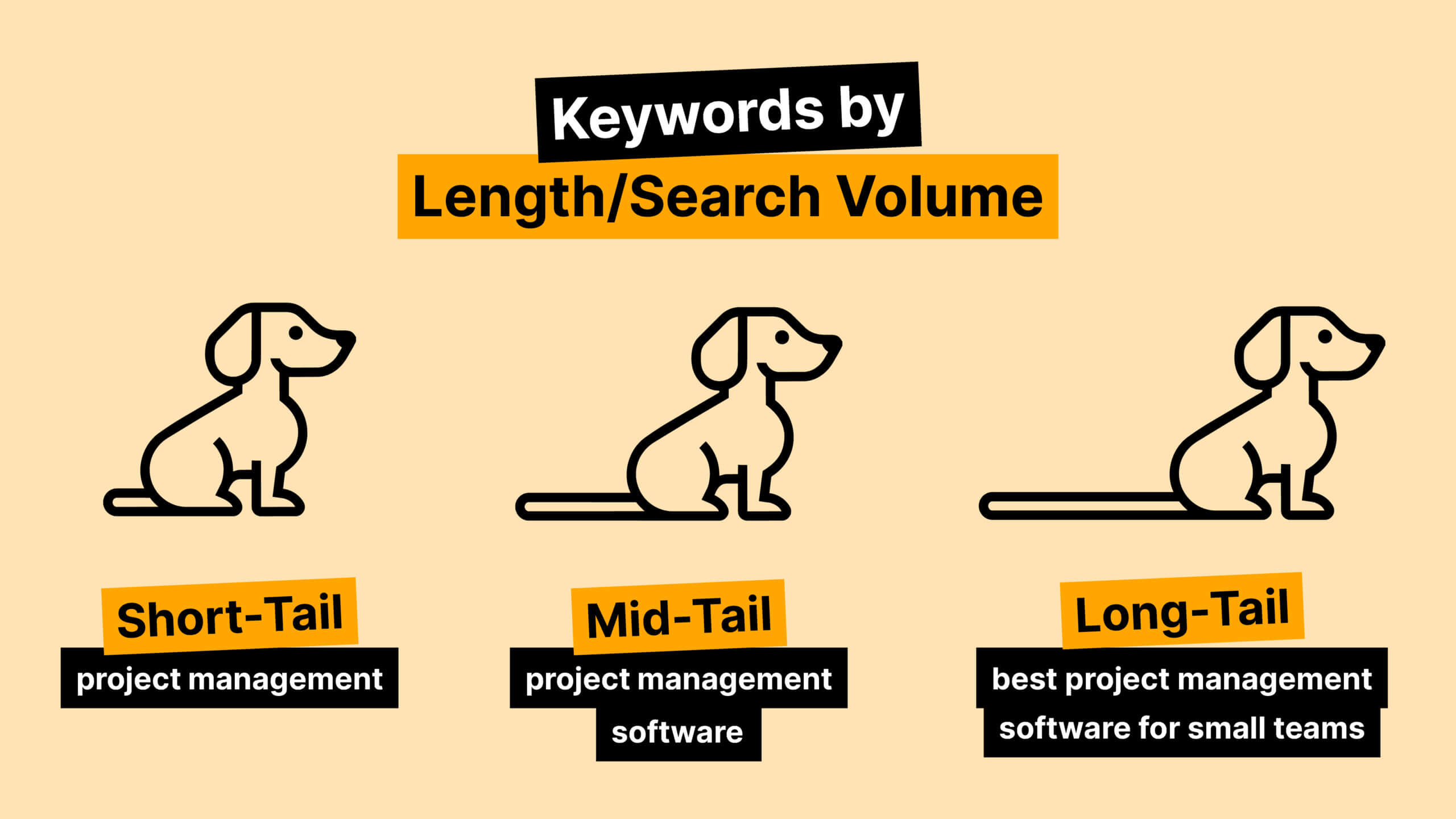
Figure 1: Keywords can be divided into three types based on search volume and specificity.
Common Mistakes in Keyword Research
If you want to succeed with SEO, it’s not enough to know what to do; you also need to know what to avoid. Many projects fail not because of the wrong tools or missing data, but because of poor decisions when selecting and evaluating keywords. Here are four common mistakes and how to avoid them:
1. Focusing Exclusively on Search Volume
High search volume may sound attractive at first. But what good is a keyword with thousands of monthly searches if the competition is overwhelming or the search query doesn’t match your offer? Relevance and the likelihood of achieving good rankings with reasonable effort are far more important than sheer volume.
2. Not Questioning Search Intent
Behind every keyword is a specific need. Ignoring this means optimizing for the wrong target. There are four main types of keywords, each reflecting a different intent:
- Informational keywords: Users are looking for information, instructions, or knowledge. Example: “how does keyword research work”
- Navigational keywords: Users want to navigate to a specific website or brand. Example: “.kloos agency”
- Commercial keywords: Searchers have purchase intent but are still comparing options. Example: “best tool for keyword research”
- Transactional keywords: User intent is clearly aimed at a purchase or conversion. Example: “sign up for a SEMrush subscription”
However, the intent behind keywords is not always clear-cut. A search query such as “build a website” can indicate both a search for information (“How do you do that?”) and a search for a specific service (“I want to find an agency to do this for me”). Search intent also changes with trends, technological developments, and even the season. A few years ago, “AI text generator” was probably more of an informational search, since the term wasn’t yet widely known. Today, it’s about finding a product that can generate written content.
For this reason, it’s crucial not to analyze search intent just once, but to review it regularly. Only then can you ensure that your content continues to meet user expectations.
3. Copying Competitor Keywords Without Review
It’s certainly worthwhile to analyze successful competitor pages. But simply copying their keywords rarely works. You need to check whether these terms actually align with your own goals, or whether competitors simply have a completely different positioning. Competitor analysis can be a great source of inspiration, but your own keyword evaluation remains essential.
4. Not Reviewing the Search Results Carefully
A keyword only tells part of the story. Only an actual Google search reveals which types of content are ranking well. Is it a blog post, a product listing, or a video? Ignoring this information can result in providing the wrong format—leaving you with little chance of ranking sucessfully. The SERPs clearly show what Google (and therefore users) expect.
Search behavior, terminology, and intent are constantly evolving due to changing trends, technologies, and new formats in search results. That’s why keyword research should be reviewed and adjusted regularly.
What You Can Do with Solid Keyword Research
Well-thought-out keyword research provides more than just a list of terms—it gives you direction. By taking the time to identify the right topics, you create the foundation for content that actually gets found and is relevant to the target audience.
Once you’ve nailed this step, many other aspects become easier: from writing content and internal linking to data-driven evaluation of results. Good rankings are rarely a coincidence—they start with asking the right questions.